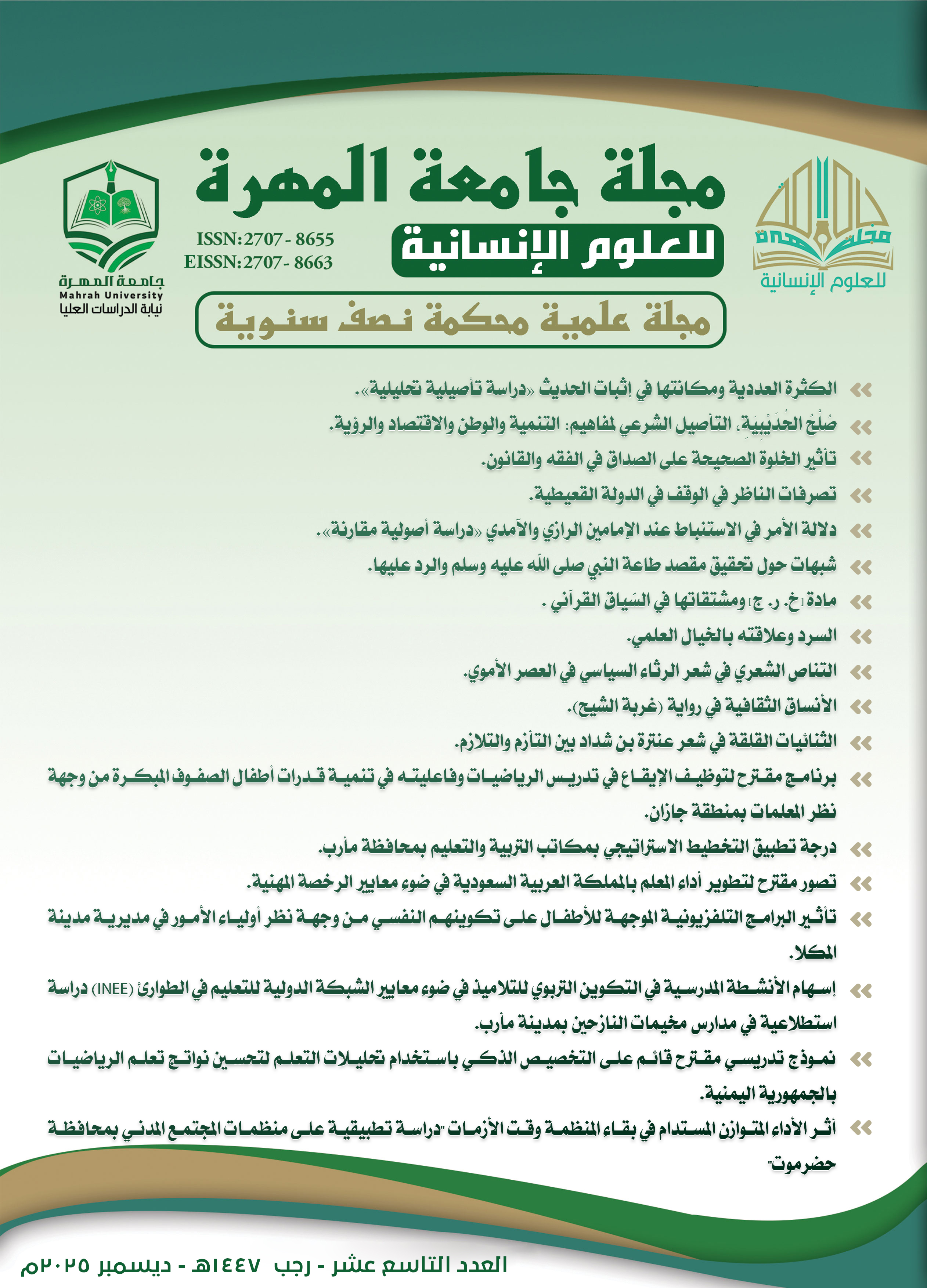
Numerical Abundance and Its Role in Establishing Hadith Authenticity « A Foundational and Analytical Study
DOI:
https://doi.org/10.71311/.v6i2.232Keywords:
Ilm al-ḥadīth(the science of ḥadīth),, ḥujjiyyat al-Sunnah (the authority of the Sunnah), adad al-aḥādīth (number of ḥadīth),, al-ḍabṭ wa al-‘adālah (precision and integrity), al-shubuhāt al-ḥadāthiyyah (modernist doubts),, ruwāt al-ḥadīth (ḥadīth narrators).Abstract
This research addresses the issue of al-‘adad (numerical quantity) in ḥadīth transmission, one of the intricate topics in ‘ilm al-ḥadīth (the science of ḥadīth) due to its direct impact on classifying aḥādīth as mutawātir (mass-transmitted) or āḥād (solitary), and consequently, on the acceptance or rejection of reports. In modern times, the question of numerical quantity has become a subject of debate, as some contemporary writers have stipulated tawātur (recurrent mass transmission) and large numbers as conditions for accepting the Sunnah, necessitating a scholarly, foundational study that clarifies the methodology of muḥaddithūn (ḥadīth scholars) in dealing with numerical criteria.
This research sought to establish the correct understanding of al-‘adad according to ahl al-ḥadīth (the scholars of ḥadīth) by demonstrating that the criteria for acceptance are based on ‘adālah (integrity) and ḍabṭ (precision in transmission) rather than the multiplicity of transmission chains. The study emphasized that a large number of narrators is not a prerequisite for validating a ḥadīth; rather, the reliability and precision of a single narrator suffice, as in the case of khabar al-āḥād (solitary reports). The researcher examined the stance of the Qur’an and Sunnah on the concept of numerical quantity, highlighting the miraculous nature of the Prophetic Sunnah in encompassing all aspects of Islamic law despite its seemingly limited numerical transmission. Additionally, the study reviewed scholarly opinions on the number of aḥādīth that have reached us and refuted those who insist on numerical abundance as a condition for accepting reports.
The research employed inductive, analytical, and critical methodologies, concluding that numerical quantity is not a criterion for the authority (ḥujjiyyah) of a narration. Rather, the decisive factors are the qualities of the transmitter. The study underscores the importance of adhering to the meticulous critical methodology established by the imams of ḥadīth, particularly in light of contemporary doubts aimed at undermining the authority of the Prophetic Sunnah. The research affirms that the criteria for accepting narrations are thiqah (trustworthiness) and ḍabṭ (precision), not the number of narrators. Abundance does not necessarily indicate authenticity, nor does scarcity imply weakness. Moreover, the texts of the Sunnah comprehensively cover all aspects of legislation despite their limited number—a testament to divine preservation and effective transmission. The study also asserts that requiring large numbers is an unfounded rationalistic innovation (bid‘ah ‘aqliyyah), unsupported by textual or rational evidence.
The researcher recommended raising awareness of the muḥaddithūn’s methodology among students and researchers, as well as conducting parallel studies addressing contemporary doubts about the authority of the Sunnah from other perspectives.
Downloads
References
القرآن الكريم.
ابن حبان، محمد بن حبان البستي، صحيح ابن حبان، تحقيق: شعيب الأرناؤوط، مؤسسة الرسالة – بيروت، ط2. (1414 هـ – 1993م)،
ابن حنبل، أحمد بن محمد، مسند أحمد، تحقيق: شعيب الأرناؤوط - عادل مرشد، وآخرون، إشراف: د عبد الله بن عبد المحسن التركي، مؤسسة الرسالة، ط1. (1421هـ - 2001م)
الأندلسي، أبو محمد علي بن أحمد بن سعيد بن حزم الأندلسي القرطبي الظاهري (المتوفى: 456هـ)، الإحكام في أصول الأحكام، المحقق: الشيخ أحمد محمد شاكر، قدم له: الأستاذ الدكتور إحسان عباس، الناشر: دار الآفاق الجديدة، بيروت.
تيمية، أحمد بن عبد الحليم (المتوفى: 728هـ) مجموع الفتاوى، تحقيق: عبد الرحمن بن محمد بن قاسم، مجمع الملك فهد لطباعة المصحف الشريف، المدينة النبوية، المملكة العربية السعودية، 1416هـ/1995م
حبان، محمد بن أحمد (المتوفى: 354هـ)، المجروحين من المحدثين والضعفاء والمتروكين، تحقيق: محمود إبراهيم زايد، دار الوعي – حلب، ط1، 1396هـ،
الخطيب البغدادي، أحمد بن علي (المتوفى: 463هـ)، الكفاية في علم الرواية، تحقيق: أبو عبدالله السورقي، إبراهيم حمدي المدني، المكتبة العلمية - المدينة المنورة.
الخطيب البغدادي، أحمد بن علي (المتوفى: 463هـ)، تاريخ بغداد وذيوله، دار الكتب العلمية – بيروت، دراسة وتحقيق: مصطفى عبد القادر عطا، ط1، 1417 هـ.
الخطيب البغدادي، أحمد بن علي، الجامع لأخلاق الراوي وآداب السامع، تحقيق: د. محمود الطحان، الناشر: مكتبة المعارف – الرياض، عدد الأجزاء: 2.
الذهبي، محمد بن أحمد بن عثمان(المتوفى: 748هـ)، 1427هـ-2006م، سير أعلام النبلاء، الناشر: دار الحديث- القاهرة.
الذهبي، محمد بن أحمد بن عثمان، تذكرة الحفاظ، دراسة وتحقيق: زكريا عميرات، الناشر: دار الكتب العلمية بيروت-لبنان، ط1 . 1419 هـ- 1998م.
السجستاني، أبو داود سليمان بن الأشعث بن إسحاق بن بشير بن شداد بن عمرو الأزدي (المتوفى: 275هـ)، سنن أبي داوود، المحقق: محمد محيي الدين عبد الحميد.
السيوطي، عبد الرحمن بن أبي بكر، تدريب الراوي في شرح تقريب النواوي، تحقيق: عبد الوهاب عبد اللطيف، مكتبة الرياض الحديثة – الرياض.
الشامي، صالح أحمد، 2015م، مقدمة كتابه معالم السنة النبوية، دار القلم، دمشق.
الصلاح، عثمان بن عبد الرحمن، معرفة أنواع علوم الحديث، المحقق: عبد اللطيف الهميم - ماهر ياسين الفحل، دار الكتب العلمية. 1423 هـ / 2002 م.
عتر، الدكتور نور الدين، 1401 هـ -1981 م، منهج النقد في علوم الحديث، الناشر: دار الفكر، دمشق – سورية، الطبعة: الثالثة.
العسقلاني، أحمد بن علي بن حجر أبو الفضل الشافعي، فتح الباري شرح صحيح البخاري، الناشر: دار المعرفة - بيروت، 1379، رقم كتبه وأبوابه وأحاديثه: محمد فؤاد عبد الباقي، قام بإخراجه وصححه وأشرف على طبعه: محب الدين الخطيب، عليه تعليقات العلامة: عبد العزيز بن عبد الله بن باز، عدد الأجزاء: 13.
العسقلاني، أحمد بن علي بن محمد بن حجر، (1429 هـ - 2008 م)، نُزْهَةُ النَّظَرِ فِي تَوضِيحِ نُخْبَةِ الْفِكَرِ فِي مُصْطَلَحِ أَهْلِ الأَثَرِ، المحقق: أ. د. عبد الله بن ضيف الله الرحيلي (جامعة طيبة بالمدينة المنورة).
قيم الجوزية، محمد بن أبي بكر (المتوفى: 751 هـ)، إعلام الموقعين عن رب العالمين، قدم له وعلق عليه وخرج أحاديثه وآثاره: أبو عبيدة مشهور بن حسن آل سلمان، شارك في التخريج: أبو عمر أحمد عبد الله أحمد، دار ابن الجوزي للنشر والتوزيع، المملكة العربية السعودية، ط1. 1423 هـ
النووي، أبو زكريا محيي الدين يحيى بن شرف النووي (المتوفى: 676هـ)، 1392، المنهاج شرح صحيح مسلم بن الحجاج، الناشر: دار إحياء التراث العربي – بيروت، الطبعة: الثانية، عدد الأجزاء: 18 (في 9 مجلدات).
النووي، أبو زكريا محيي الدين يحيى بن شرف النووي (المتوفى: 676هـ)، المجموع شرح المهذب ((مع تكملة السبكي والمطيعي))، الناشر: دار الفكر.
Downloads
Published
How to Cite
Issue
Section
License
Copyright (c) 2025 د. بلال حميد يحيى الروحاني

This work is licensed under a Creative Commons Attribution 4.0 International License.
Copyright and Licensing
copyright is retained by the authors. Articles are licensed under an open access Creative Commons CC BY 4.0 license, meaning that anyone may download and read the paper for free. In addition, the article may be reused and quoted provided that the original published version is cited. These conditions allow for maximum use and exposure of the work.