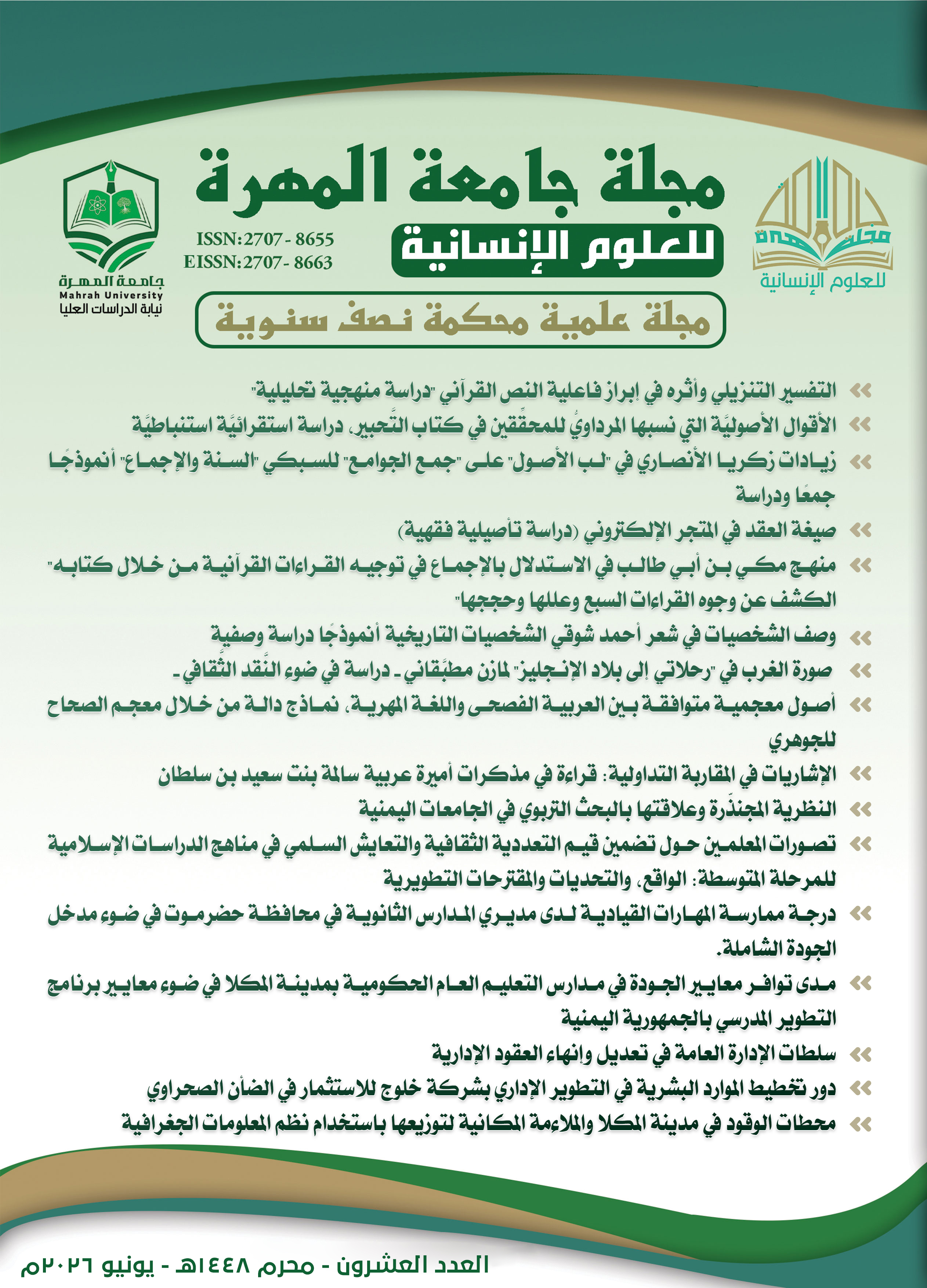
Revelation-Based Exegesis and Its Impact on Highlighting the Qur'anic Text's Efficacy: A Methodological and Analytical Study
DOI:
https://doi.org/10.71311/.v7i1.253Keywords:
Tanzīl-based Exegesis, Qur’anic Textual Dynamism, Context of Revelation, Textual Relevance, Application of RevelationAbstract
This study examines Tanzīl-based exegesis as a Qur’anic interpretive approach that begins with analyzing the historical context of revelation, its circumstances, and the gradual development of Qur’anic discourse, with the aim of uncovering the mechanisms through which the Qur’anic text maintains its effectiveness and relevance across changing realities. In this study, Tanzīl-based exegesis is not confined to interpreting the Qur’an according to the chronological order of revelation; rather, it is approached as a methodological framework in which the study of revelation serves as an analytical gateway to understanding the objectives of the text and the process by which it moves from addressing specific historical situations to establishing universal principles capable of extended application. The concept of the vitality of the Qur’anic text is employed here as an operational term referring to the text’s capacity for continuous meaning production, its dynamic engagement with evolving contexts, and its ability to guide individual and collective conduct through disciplined interpretive methodologies. This usage does not claim the establishment of a new technical term, but rather corresponds to widely used notions in contemporary scholarship, such as textual dynamism, functional relevance, and enduring applicability. Methodologically, the study adopts a descriptive-analytical approach to trace and analyze the concept, characteristics, and methodological controls of Tanzīl-based exegesis, alongside a comparative approach to distinguish it from related interpretive methods, particularly maqāṣid-based and thematic exegesis. Selected applied examples are presented to illustrate the methodological transition from the historical context of revelation to extended meaning, without claiming to offer fully developed contemporary legal judgments. The study concludes that Tanzīl-based exegesis, when applied within sound methodological constraints, contributes to highlighting the dynamic relationship between the Qur’anic text and reality, demonstrating its flexibility and enduring relevance through identifiable interpretive mechanisms grounded in the structure and progression of Qur’anic discourse.
Downloads
References
ابن القيم، محمد بن أبي بكر. إعلام الموقعين عن رب العالمين. دار الكتب العلمية- بيروت، 1991م.
ابن تيمية، أحمد بن عبد الحليم، مجموع الفتاوى. مجمع الملك فهد، المدينة المنورة، 1995م.
ابن تيمية، أحمد بن عبد الحليم، مقدمة في أصول التفسير. دار ابن الجوزي، الدمام، 1988م.
ابن رشد، محمد بن أحمد. الضروري في أصول الفقه. منشورات دار الآفاق، بيروت، 1983م.
ابن عاشور، محمد الطاهر. التحرير والتنوير. الدار التونسية للنشر، تونس، 1984م.
ابن عاشور، محمد الطاهر، مقاصد الشريعة الإسلامية، تحقيق: محمد الطاهر الميساوي، دار النفائس، ط2، 2001م. DOI: https://doi.org/10.37144/0298-006-023-006
ابن منظور، محمد بن مكرم. لسان العرب. دار صادر، بيروت، 1994م.
إسماعيل، محمد بكر ، دراسات في علوم القرآن، دار المنار، القاهرة، 1997م.
البخاري، محمد بن إسماعيل، صحيح البخاري، دار ابن كثير، بيروت، 2002م.
البغوي، الحسين بن مسعود. معالم التنزيل. دار طيبة، الرياض، 1989م.
بور، عبد الكريم بهجت، التفسير التنزيلي: المبادئ والأصول والقواعد والفوائد، دار الطباعة والنشر بمعهد الثقافة والفكر الإسلامي.
الجزائري، أبو بكر جابر، أيسر التفاسير، مكتبة العلوم والحكم- المدينة المنورة، 2003م.
جغيم، نعمان، طرق الكشف عن مقاصد الشارع، دار النفائس- عمّان، 2012م.
الخادمي، نور الدين، التفسير المقاصدي للقرآن الكريم. دار ابن كثير- دمشق، 2011م.
دراز، محمد عبد الله، النبأ العظيم، دار القلم- الكويت، 1970م.
الرومي، اتجاهات التفسير في القرن الرابع عشر الهجري-السعودية، ط/الأولى 1407ه.
الريسوني، أحمد، الفكر المقاصدي: قواعده وفوائده، دار الكلمة- بيروت، 1993م.
الريسوني، قطب، النص القرآني من تهافت القراءة إلى أفق التدبر (مدخل إلى نقد القراءات وتأصيل علم التدبر القرآني). دار الكلمة للنشر والتوزيع، 2010م.
الزركشي، بدر الدين، البرهان في علوم القرآن، دار المعرفة، بيروت، 1988م.
السيوطي، جلال الدين، الإتقان في علوم القرآن، دار الفكر- بيروت، 1996م.
الشاطبي، إبراهيم بن موسى، الموافقات في أصول الشريعة، دار المعرفة- بيروت 1997م.
الطبري، محمد بن جرير. جامع البيان في تأويل آي القرآن. دار هجر، القاهرة، 2001م.
عباس، فضل ، التفسير والمفسرون في العصر الحديث، دار النفائس- الأردن، ط/ الأولى.
عباس، فضل حسن ، قضايا قرآنية في الموسوعة البريطانية، ط/ الثالثة.
عباس، فضل حسن ، المنهل العذب في علوم القرآن، دار الفرقان، ط1، 1425هـ.
العلواني، طه جابر. الجمع بين القراءتين: قراءة الوحي وقراءة الكون. دار الشروق، 2006
الغزالي، محمد بن محمد، كيف نتعامل مع القرآن، دار النهضة- مصر، ط/الأول 1416ه
القطان، مناع بن خليل، مباحث في علوم القرآن، مكتبة المعارف- الرياض، 1996م.
مسلم بن الحجاج، صحيح مسلم، دار إحياء التراث العربي- بيروت، 2002م.
الميداني، عبد الرحمن حبنكة، قواعد التدبر الأمثل، دار القلم- دمشق، 2005م.
النبهان، محمد فاروق، المدخل إلى علوم القرآن الكريم، دار القلم- دمشق، 2004م
نجيب، أحمد؛ وأوزدمير، بشرى. "دور التفسير الحضاري للقرآن الكريم في بناء الهوية الإسلامية". مجلة دوزجة الإلهيات، المجلد 9 (Düzce İlahiyat Dergisi)، عدد 2 (ديسمبر 2025): 610-640. DOI: https://doi.org/10.61272/duid.1739763
نور الدين، لعموري ، وبلخير، طاهري ، تجدد الخطاب القرآني- قراءة تدبرية في فاعلية النص القرآني وإعجازه مجلة العلوم الإسلامية والحضارة، المجلد 10- العدد 2، السنة: 2025م، جامعة أحمد بن بلة ، وهران ، الجزائر
Downloads
Published
How to Cite
Issue
Section
License
Copyright (c) 2026 د. أحمد حسن صالح الفقيه

This work is licensed under a Creative Commons Attribution 4.0 International License.
Copyright and Licensing
copyright is retained by the authors. Articles are licensed under an open access Creative Commons CC BY 4.0 license, meaning that anyone may download and read the paper for free. In addition, the article may be reused and quoted provided that the original published version is cited. These conditions allow for maximum use and exposure of the work.