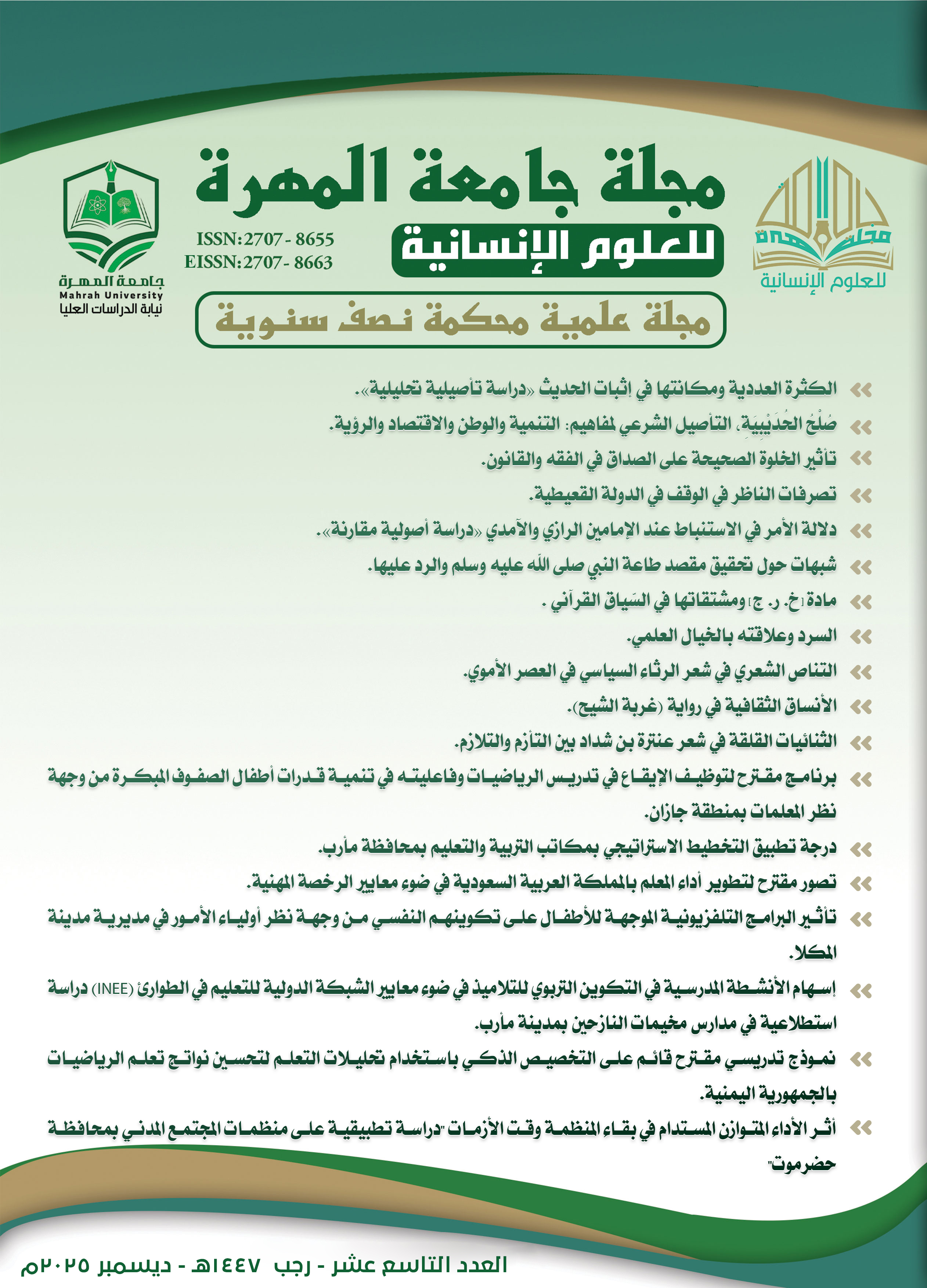
The Indicative Meaning of the Imperative (Dalālat al-Amr) in Jurisprudential Deduction (al-Istinbāṭ) according to Imams Al-Razi and Al-Amidi: A Comparative Usuli Study
DOI:
https://doi.org/10.71311/.v6i2.237Keywords:
Al-Razi, Al-Amidi, Meaning of the Imperative (Dalālat al-Amr),, Methods of Deduction (Ṭuruq al-Istinbāṭ),, Principles of Jurisprudence (Uṣūl al-Fiqh), Rational Methodology (Al-Manhaj al-ʿAqlī).Abstract
This research examines the methodological approaches to jurisprudential deduction (istinbāṭ) employed by two luminaries in the field of the Principles of Islamic Jurisprudence (Uṣūl al-Fiqh), Imam Fakhr al-Din al-Razi and Imam Sayf al-Din al-Amidi, through an analysis of their respective understandings of the indicative meaning (dalālah) of the imperative form (al-amr) in divine legal discourse (al-khiṭāb al-sharʿī). The study focuses on elucidating the rational and methodological foundations that underpinned Al-Razi and Al-Amidi's comprehension of the imperative's signification, while also clarifying the impact of this understanding on the process of deriving legal rulings.
The research aims to provide a brief introduction to both Imams and to illuminate key features of their deductive methodologies through the specific lens of the imperative. The study is structured into an introduction and two main chapters: Chapter One: The Nature of the Imperative (Ḥaqīqat al-Amr) and Its Addressees. Chapter Two: The Indicative Meaning of the Imperative according to Imams Al-Razi and Al-Amidi.
The research concludes with several key findings, including:
- Al-Razi and Al-Amidi concur that the default principle regarding the imperative form is that it denotes immediate obligation (al-wujūb) unless contextual evidence (qarīnah) dictates otherwise—a view held by the majority of legal theorists (jumhūr al-uṣūliyyīn).
- Both Imams Al-Razi and Al-Amidi were distinguished by their exceptional proficiency in logic and theological discourse (kalām), exemplified by their ability to differentiate between verbal (lafẓiyyah) and rational (ʿaqliyyah) indications.
Recommendations:
- Encourage comparative studies among legal theorists on issues pertaining to the semantic implications of utterances (dalālāt al-alfāẓ), to further reveal the influence of rational and theological methodologies on the construction of usuli theory.
- Emphasize the importance of revisiting major foundational texts, such as Al-Maḥṣūl and Al-Iḥkām, and making them accessible to contemporary students through systematic and modern explanatory approaches.
Downloads
References
ابن قيم الجوزية، محمد بن أبي بكر بن أيوب (المتوفى: 751هـ)، إعلام الموقعين عن رب العالمين، تحقيق: محمد عبد السلام إبراهيم، دار الكتب العلمية – بيروت، ط1، 1411ه.
ابن ماجة، محمد بن يزيد القزويني، (المتوفى: 273هـ)، سنن ابن ماجه، تحقيق: محمد فؤاد عبد الباقي، دار إحياء الكتب العربية -فيصل عيسى البابي الحلبي.
أبو داود، سليمان بن الأشعث (المتوفى: 275هـ)، سنن أبي داوود، تحقيق: محمد محيي الدين عبد الحميد، المكتبة العصرية، صيدا – بيروت.
الآمدي، علي بن أبي علي (المتوفى: 631هـ)، الإحكام في أصول الأحكام، تحقيق: عبد الرزاق عفيفي، المكتب الإسلامي، بيروت-دمشق-لبنان.
الباقلاني، محمد بن الطيب بن محمد (المتوفى: 403 هـ)، التقريب والإرشاد، تحقيق د. عبد الحميد بن علي أبو زنيد، مؤسسة الرسالة، ط2، 1418 هـ.
الترمذي، محمد بن عيسى، (المتوفى: 279هـ)، سنن الترمذي، تحقيق وتعليق: أحمد محمد شاكر وآخرون، شركة مكتبة ومطبعة مصطفى البابي الحلبي – مصر.
الذهبي، شمس الدين محمد بن أحمد (المتوفى: 748هـ)، تاريخ الإسلام ووفيات المشاهير وَالأعلام، تحقيق: الدكتور بشار عوّاد معروف، دار الغرب الإسلامي، ط1، 2003م.
الرازي، محمد بن عمر بن الحسين، المحصول في أصول الفقه، دراسة وتحقيق: طه جابر فياض العلواني، مؤسسة الرسالة، الطبعة الثالثة، 1418هـ.
الزركشي، بدر الدين محمد بن عبد الله بن بهادر الزركشي (المتوفى: 794هـ)، البحر المحيط في أصول الفقه، دار الكتبي، ط1، 1414هـ.
سانو، مصطفى قطب، معجم مصطلحات أصول الفقه، دار الفكر (دمشق) ط1، 1420هـ.
السبكي، تاج الدين عبد الوهاب بن تقي الدين (المتوفى: 771هـ)،طبقات الشافعية الكبرى، تحقيق: د. محمود محمد الطناحي د. عبد الفتاح محمد الحلو، هجر للطباعة والنشر والتوزيع، ط2، 1413هـ.
الشيرازي، إبراهيم بن علي بن يوسف (المتوفى: 476هـ)،اللمع في أصول الفقه، دار الكتب العلمية، ط2، 1424هـ.
الصفدي، صلاح الدين (المتوفى: 764ه)ـ،الوافي بالوفيات، تحقيق: أحمد الأرناؤوط وتركي مصطفى، دار إحياء التراث -بيروت-1420هـ.
الغزالي، أبو حامد (المتوفى: 505هـ)،المستصفى من علم الأصول، تحقيق: محمد عبد السلام عبد الشافي، دار الكتب العلمية، ط1، 1413ه.
Downloads
Published
How to Cite
Issue
Section
License
Copyright (c) 2025 وليد أحمد عبيد شنتوف

This work is licensed under a Creative Commons Attribution 4.0 International License.
Copyright and Licensing
copyright is retained by the authors. Articles are licensed under an open access Creative Commons CC BY 4.0 license, meaning that anyone may download and read the paper for free. In addition, the article may be reused and quoted provided that the original published version is cited. These conditions allow for maximum use and exposure of the work.